Parsons Bookshop: At the Heart of Bohemian Dublin, 1949-1989.
Find out more
Dublin's Latin Quarter
A History and Guidebook
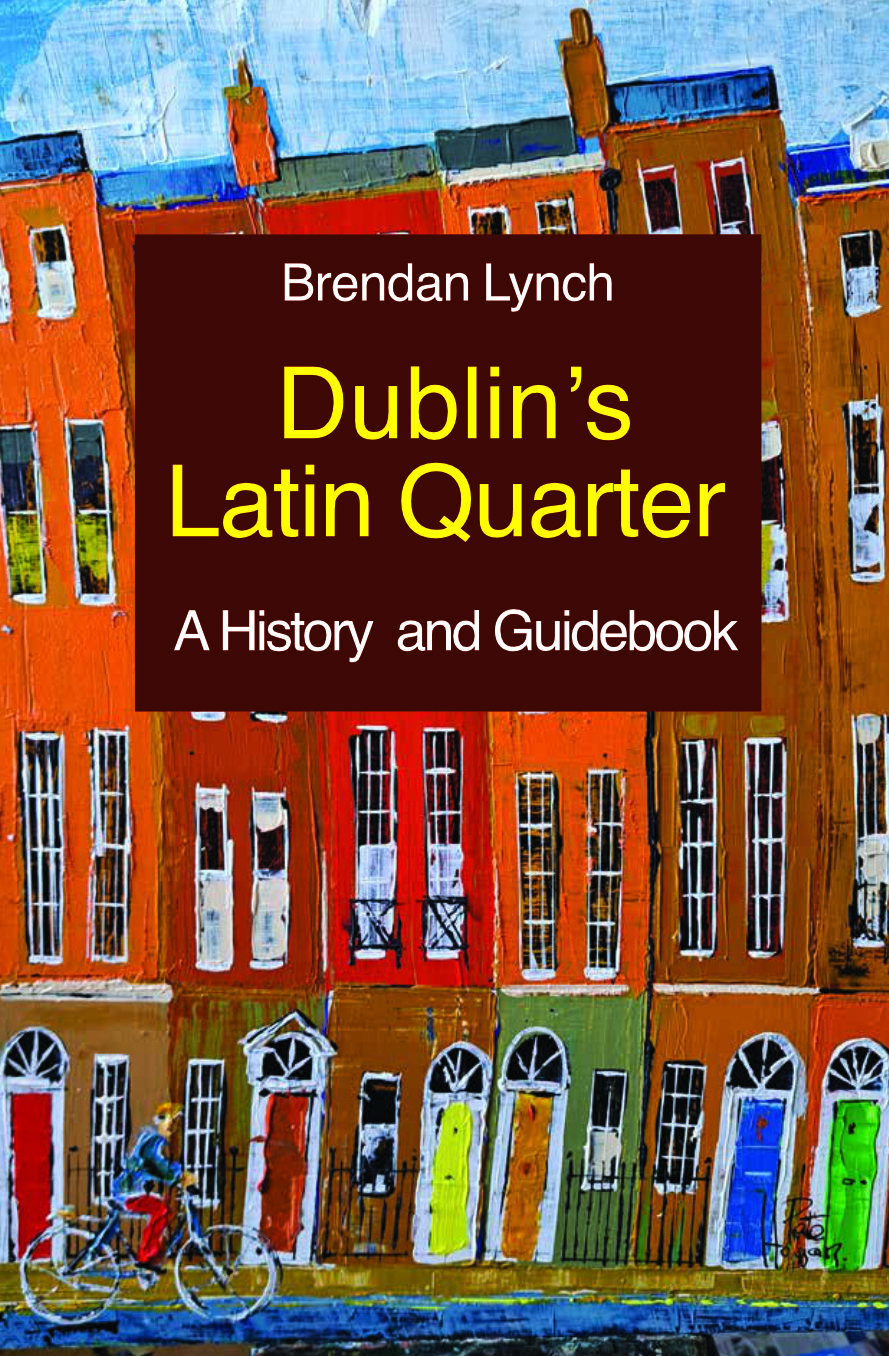
The final of Brendan Lynch's five books on literary Dublin, this first comprehensive Visitors' Guide to Dublin's Latin Quarter – based in the city's south Georgian enclave - features biographies and details of the homes and haunts of Ireland's most famous writers, artists and musicians.
From Samuel Beckett, Brendan Behan and Mary Lavin to Elizabeth Bowen, Maeve Binchy, James Joyce and W. B. Yeats. Artists Francis Bacon, John Behan, Roderic O'Conor and the pioneering May Guinness. And musicians Joan Trimble, Michael Larchet and composer Charles Villiers Stanford.
The Latin Quarter runs from Pembroke Road and Upper Baggot Street to Merrion Row and St. Stephen's Green. It encompasses Fitzwilliam and Merrion Squares, home to Jack Yeats, Mainie Jellett and the remarkable Wilde family.
The Quarter is bordered by the Grand Canal, which channels the countryside into town. A singularly fruitful retreat for muses whose creations have reverberated around the world. From Ulysses and The Importance of Being Earnest to Dracula, Pygmalion, The Playboy of the Western World, The Quare Fellow, The Ginger Man and Waiting for Godot.
"The period 1945-55, for the arts in Ireland, was a particularly rich one – considering the golden age that had preceded. A universal reaction following the insularity of the five wartime years of neutrality. The windows had been flung open and, intellectually speaking, people were breathing again...
There was little cohesion of plan so that it would be too much to claim that anything like a literary movement was born – except in the sense that AE defined literary movements: 'five or six people who lived in the same town and hate each other cordially.'"
- John Ryan
Brendan Lynch insists:
'Visiting the homes of writers and artists, following in their footsteps, provides a rare sense of immediacy. A tangible feeling of the lives they led, the surroundings which shaped them, an insight into their work. Here, James Clarence Mangan dreamed of being a poet. There, George Moore entertained guests under paintings by his friends Pissarro and Eduard Manet. Across the street, novelist and poet Oliver St. John Gogarty was kidnapped. On this canal bank, Elizabeth Bowen took her first walks, James Joyce expounded his theories of Art and Mainie Jellett drew her earliest sketches.'
Foreword / Isadore Ryan
Foreword
This book comes with the intriguing title of 'Dublin's Latin Quarter'. Many readers might be wondering whether such a creature exists. The moniker is seen as properly belonging to the well-known, tourist-infested district on the left bank of Paris. But dig deeper and one can see parallels in Ireland's capital.
While Dublin has never had the kind of café and restaurant culture that gives the French capital its ambiance, it does have a number of historic, more or less seedy pubs. Those concentrated in a small area on the Left Bank of the Grand Canal (in place of the Seine) have been patronised by generations of artists and writers. This area, Dublin's Latin Quarter, can be seen as running along the axis from Upper Baggot Street to St. Stephen's Green and west from the regretted Parson's Bookshop on Baggot Street bridge along either side of the Grand Canal to Leeson Street Bridge - once the tramping ground of Patrick Kavanagh, Liam O'Flaherty and Maeve Binchy.
The area naturally also encompasses Fitzwilliam Square and Merrion Square, evocative of Jack Yeats and less well-know artistic residents. Proving that birds of a feather flock together, some of these denizens of Dublin's Latin Quarter, including O'Flaherty, Brendan Behan and Mainie Jellet, also turn up in its Paris equivalent (see my book, Irish Paris ).
It is unlikely that there is anybody alive with such detailed knowledge as Brendan Lynch of all the nooks and crannies of Dublin's cultural geography. In previous books such as 'City of Writers', 'Prodigals & Geniuses' and 'Dublin's Graftonia', he chronicled how a wide range of creative artists wound their way more or less soberly through a city that oftentimes treated them cruelly or, worse, with indifference.
Diligently pounding the city streets, interviewing key protagonists and consulting dusty archives, the current book is the culmination of all Brendan's efforts to piece together the itineraries of créatifs who at some stage chose to work and live in Dublin's 'Latin Quarter'.
Isadore Ryan
Irish Paris author
Chapter One / Excerpt
Chapter One
But she holds my mind
With her seedy elegance,
With her gentle veils of rain
And all her ghosts that walk
And all that hide behind
Her Georgian facades...
'Do you miss the Latin Quarter?' a journalist asked Brendan Behan shortly after he returned from Paris to 15 Herbert Street in 1955.
'Miss it? Amn't I living on it - the left bank of the equally literary Grand Canal! I can't go for a constitutional without running into neighbour Liam O'Flaherty or someone lugging a notebook or easel. An artistic enclave to match la Ville Lumière's quartiere any day of the week.'
While literary aficionados rhapsodise about the Paris Left Bank, less populous Dublin boasts an arguably more vibrant and significant Latin Quarter. Anchored in the city's inspirational Georgian neighbourhood and immortalised by poet Louis MacNeice and composer Arthur Duff, it featured an extravagance of world-famous novelists, playwrights, poets, artists and musicians...
About the author / Brendan Lynch
About the author
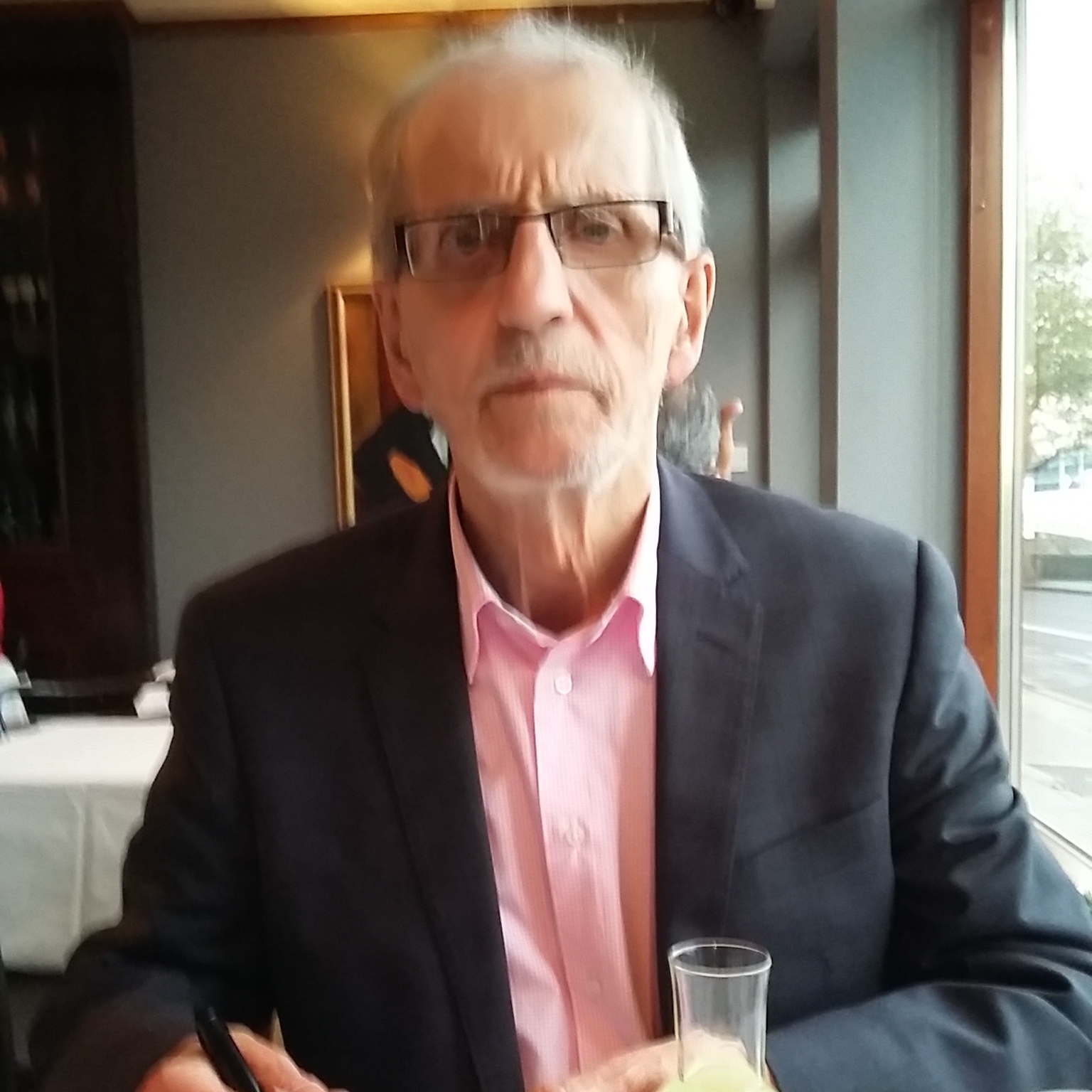
Brendan Lynch is a former racing cyclist and driver. A supporter of pacifist philosopher Bertrand Russell, he was imprisoned in London for 1960s Campaign for Nuclear Disarmament activities.
He has written ten books and contributed to national and international media from the Irish Times and Irish Independent to The Observer, The Times and The European.
A consultant for The Encyclopaedia of Ireland, Brendan's features on Irish writers encouraged the establishment of Dublin's George Bernard Shaw Museum and the James Joyce Cultural Centre.
Review / Yesterday We Were in America
"A cry of admiration for a thoroughly enjoyable book."
– John le Carre.
Review / Prodigals & Geniuses
"Brendan Lynch's book evokes vibrant memories of an ancient Dublin."
– J. P. Donleavy.
Review / There Might Be a Drop of Rain Yet
"This tender, thoughtful and beautifully written memoir."
– The Irish Times.
Review / The Old Gunner and His Medals
"The concepts of bravery, loyalty, honesty and kindness, and indeed love, are all deftly explored."
– Irish Catholic.
Review / Triumph of the Red Devil. The Irish Gordon Bennett Cup Race 1903
"Brendan Lynch brings us into the heart of that distant day's epic struggle."
– Sir Stirling Moss.
Further reading / Books by Brendan Lynch
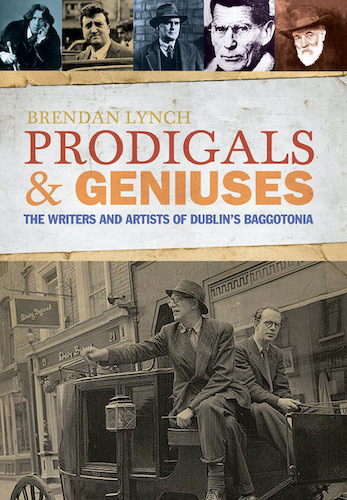
Prodigals and Geniuses: The Writers and Artists of Dublin's Baggotonia.
Find out more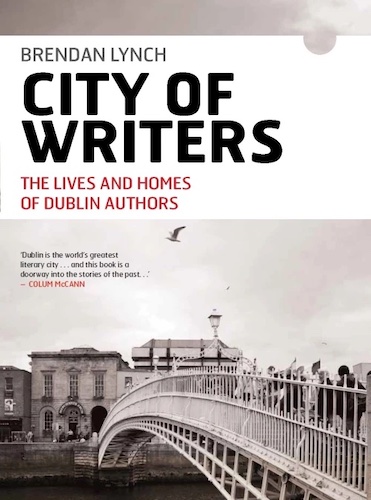
City of Writers: The Lives and Homes of Dublin Authors.
Find out more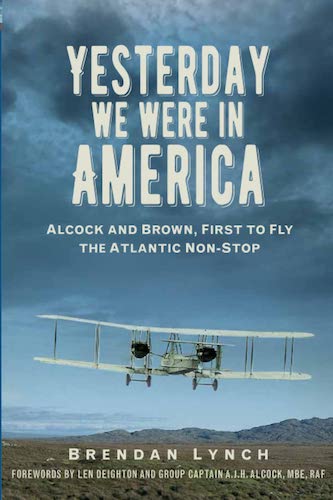
Yesterday We Were in America: Alcock and Brown, First to Fly the Atlantic Non-stop.
Find out more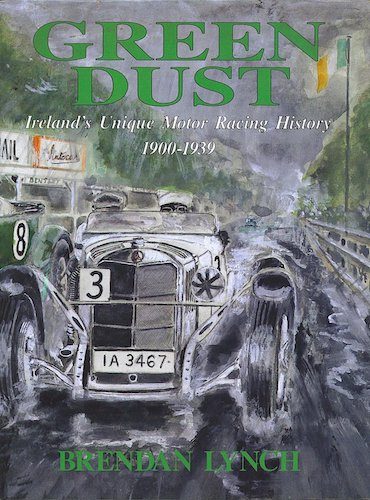
Green Dust: Ireland's Unique Motor Racing History.
Find out more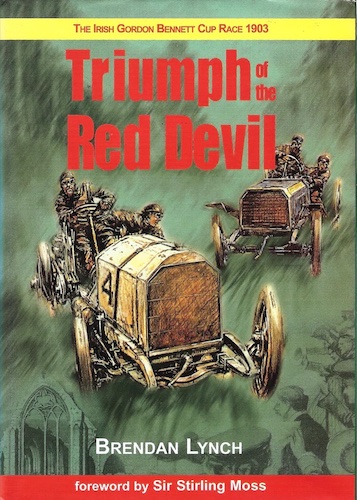
Triumph of the Red Devil. Britain's First Motor Race – The Gordon Bennett Cup 1903.
Find out more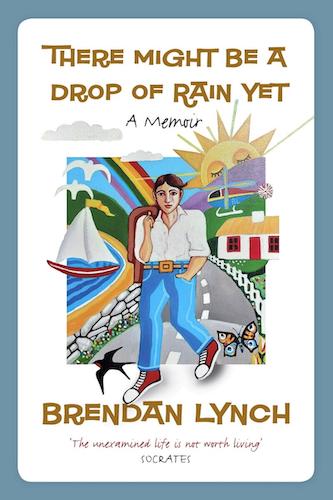
There Might be a Drop of Rain Yet: A Memoir.
Find out more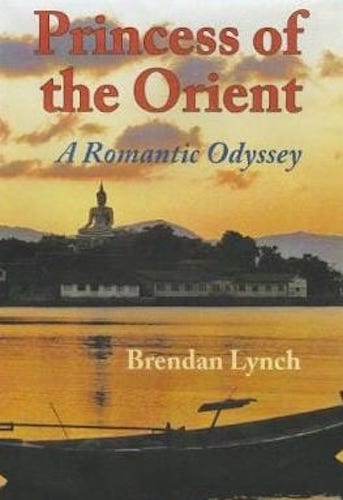
Princess of the Orient: A Romantic Odyssey.
Find out more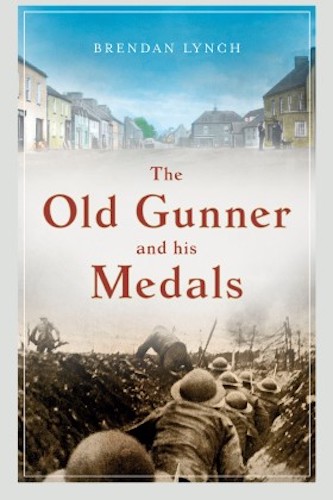
The Old Gunner and His Medals. Novella.
Find out more
Dublin's Graftonia: A Very Literary Neighbourhood.
Find out more
Dublin's Latin Quarter: A History and Guidebook.
Find out more